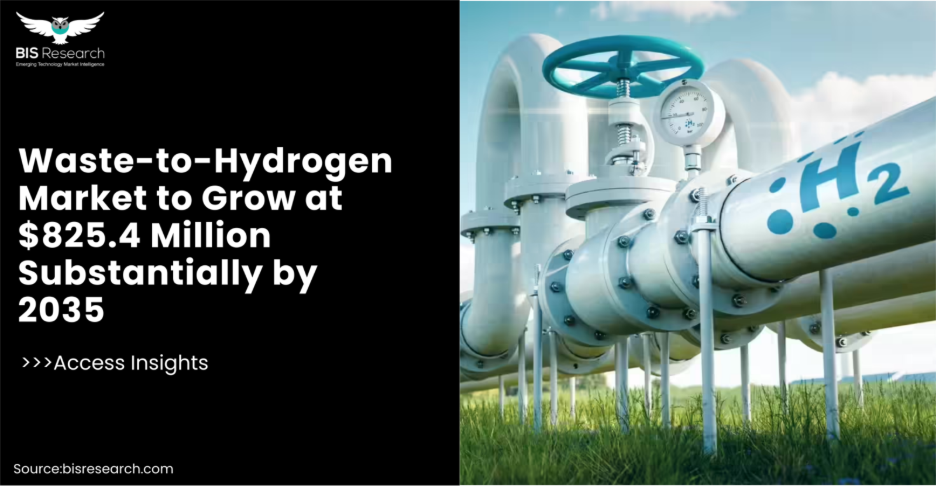
The waste-to-hydrogen market revolves around the conversion of various waste streams, including municipal solid waste, biomass, and industrial residues, into hydrogen fuel. This process plays a pivotal role in reducing landfill usage and contributing to the global energy transition by providing a sustainable, low-carbon alternative to traditional energy sources. The integration of technologies like gasification, plasma conversion, and thermochemical treatment has enabled more efficient and cost-effective hydrogen production. As the world increasingly looks for ways to reduce greenhouse gas emissions, the importance of waste-to-hydrogen systems grows.
Hydrogen, a clean energy carrier, is being adopted for a range of industrial applications, from powering fuel cells in transportation to serving as a feedstock for chemical production. As the market continues to develop, innovations in carbon capture, artificial intelligence-driven process optimization, and decentralized plant designs are helping to overcome challenges related to efficiency and environmental impact.
According to BIS Research, the waste-to-hydrogen market was valued at $40.3 million in 2024, with projections indicating it will reach $825.4 million by 2035, growing at a robust compound annual growth rate (CAGR) of 32.12%. This rapid growth is indicative of the increasing importance of hydrogen as a sustainable energy source in the circular economy.
Access insights on Waste-to-Hydrogen Market
• Sustainable Waste Management: As global waste production increases, efficient disposal methods like waste-to-hydrogen are becoming more critical.
• Demand for Clean Energy: The rising need for low-carbon hydrogen solutions is driving the adoption of waste-to-hydrogen technologies, especially in industries focused on decarbonization.
• Technological Advancements: Emerging processes such as gasification and plasma conversion are making hydrogen production from waste more scalable and affordable.
• Government Incentives: Supportive policies and financial backing for hydrogen projects, particularly green hydrogen, are accelerating market expansion.
• Circular Economy Practices: The shift toward a circular economy, where waste is minimized and reused, has reinforced the role of waste-to-hydrogen solutions.
• High Capital Costs: The initial investment for waste-to-hydrogen plants, including infrastructure and technology, can be significant.
• Technological Complexity: Integrating advanced processes like plasma conversion and gasification into existing waste management systems is complex and costly.
• Operational Efficiency: While hydrogen production is promising, optimizing the efficiency of waste conversion processes remains a challenge for many operators.
• Regulatory Hurdles: Governments need to streamline regulations surrounding the deployment of waste-to-hydrogen technologies to ensure widespread adoption.
• Infrastructure Constraints: Lack of infrastructure for large-scale hydrogen distribution and storage limits the full potential of these systems.
• June 2024: The U.S. Department of Energy (DOE) allocated $9.3 million to six waste-to-hydrogen projects, aimed at enhancing hydrogen production from diverse waste feedstocks.
• October 2025: Air Liquide invested nearly $50 million to expand its hydrogen network in the U.S. Gulf Coast, supporting a reliable hydrogen supply chain for industrial applications.
• December 2024: German researchers introduced a biotechnological process to convert wood waste into biohydrogen, supported by a $12.7 million investment.
• June 2025: Germany’s government announced budget cuts that may impact hydrogen development projects, including waste-to-hydrogen systems, amid broader economic challenges.
• Chemical Production
• Power and Energy Storage
• Transportation/Mobility
• Refining Industry
• Others
The Chemical Production sector is expected to dominate, driven by hydrogen’s role in various manufacturing processes. The chemical production segment alone is projected to reach $275.4 million by 2035, growing at a CAGR of 32.72%.
• Anaerobic Digestion
• Gasification
• Pyrolysis
• Others
• Biomass
• Industrial Waste
• Municipal Solid Waste (MSW)
• Wastewater Treatment Residues
• Others
• North America
• Europe
• Asia-Pacific
• Rest-of-the-World
[Request Sample Report] & [Download the complete TOC]
According to Principal Analyst at BIS Research:
“The waste-to-hydrogen market is poised for rapid growth as industries focus on achieving decarbonization goals and governments ramp up investments in clean hydrogen technologies. Advancements in gasification and thermochemical treatment are driving cost reductions, making waste-to-hydrogen systems more accessible for large-scale adoption. As the world transitions to a circular economy, waste-to-hydrogen systems will play a key role in creating a sustainable energy future.”
The market is expected to maintain strong growth, with a projected CAGR of 32.12%, reaching $825.4 million by 2035.
Leading companies in the waste-to-hydrogen market include BEEAH Group, Boson Energy SA, Chevron Corporation, Chinook Hydrogen, Mote, Inc., and others focusing on clean energy solutions.
Gasification, plasma conversion, and pyrolysis are the most popular technologies, enabling scalable and efficient hydrogen production from various waste streams.
Get deeper, tailored insights with a customized report designed around your market, technology focus, and strategic goals.