The global mobility landscape is entering a transformative era unlike anything witnessed in the past century. As we move through 2025, transportation systems around the world are being reshaped by the powerful convergence of electrification, autonomous technologies, connected ecosystems, and sustainability-driven innovation. What was once considered futuristic; self-driving cars, vehicle-to-everything communication, intelligent traffic systems, and zero-emission of transport is now transitioning into mainstream reality. Nations are accelerating clean mobility policies, technology companies are redefining automotive intelligence, and consumers are embracing smarter, greener alternatives.
At the center of this shift is the rapid adoption of electric vehicles (EVs) backed by breakthroughs in battery technologies, including solid-state, sodium-ion, and fast-charging solutions. In parallel, autonomous and connected vehicles are evolving into sophisticated digital platforms capable of learning, analyzing, and making real-time decisions. These systems, powered by AI and ultra-fast networks, are paving the way for safer roads, optimized logistics, and fully automated mobility services.
Meanwhile, hydrogen-powered mobility is emerging as a viable solution for heavy-duty, long-range, and commercial transport needs. Cities worldwide are experimenting with shared mobility, mobility-as-a-service (MaaS), and integrated public transport systems to address urban congestion and environmental concerns. As mobility ecosystems become smarter, governments are strengthening regulatory frameworks covering cybersecurity, safety standards, emissions, and autonomous driving guidelines.
This pillar page explores the major trends shaping the Future of Mobility in 2025, including electric and hydrogen mobility, autonomous driving, connected systems, urban shared transport, and smart mobility governance, giving you a comprehensive view of the innovations redefining how the world moves.
Heavy-duty autonomous vehicles (HD-AVs) have become one of the most disruptive forces in logistics, mining, and industrial transport. By 2025, the segment has moved from early-stage pilots to full-scale commercial deployment, powered by advancements in AI, electrification, and connected mobility. HD-AVs now operate across highways, ports, mining sites, and dedicated freight corridors; delivering safer, cleaner, and more predictable mobility.
Between 2024 and 2025, global OEMs and autonomous tech leaders expanded real-world deployments:
Explore More on Market Insight and Trends
Download Sample Report
The shift: From limited pilots to revenue-generating, on-ground operations in freight and heavy industries.
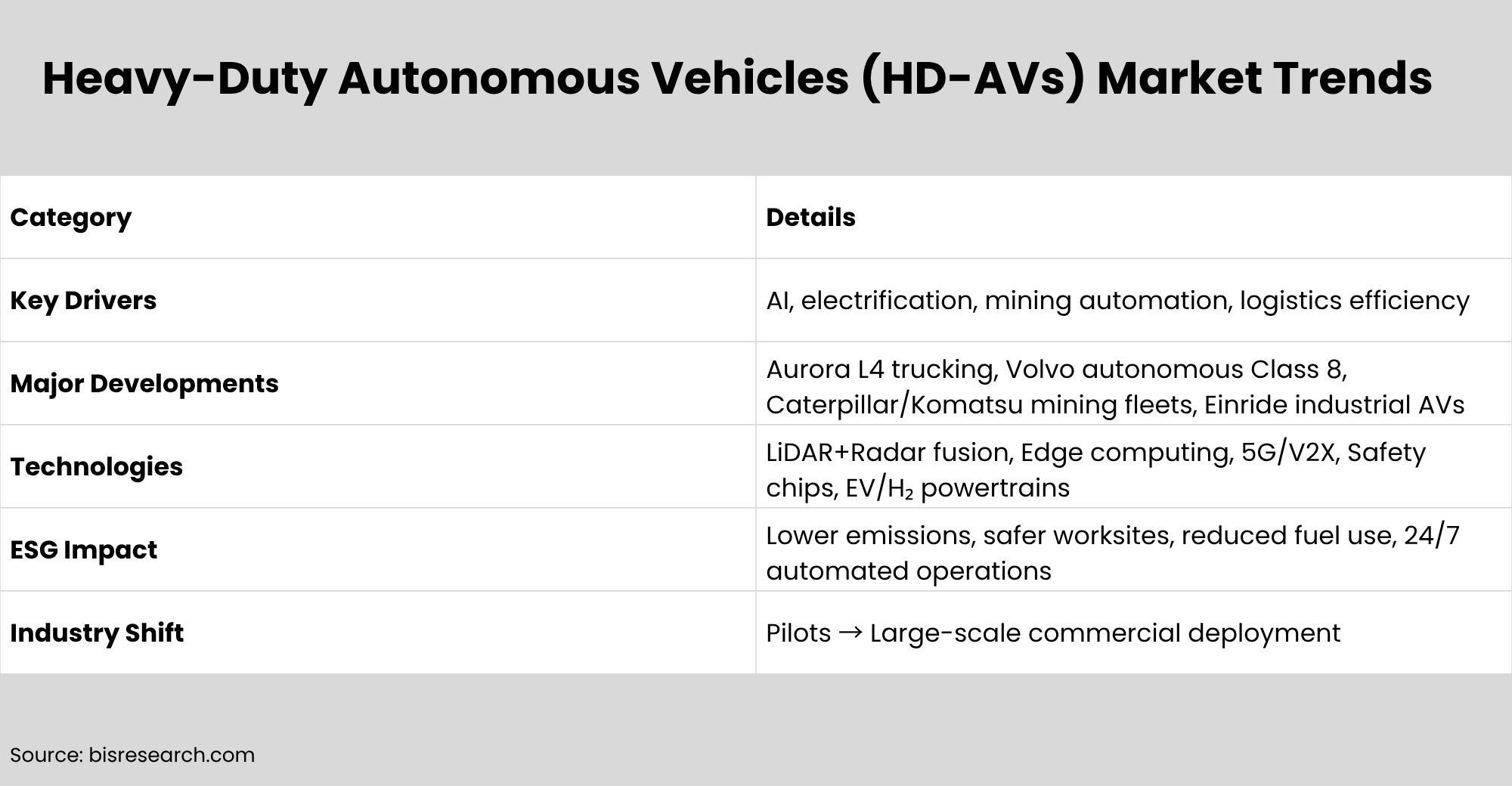
Modern HD-AVs integrate sophisticated hardware–software stacks, including:
These innovations enable HD-AVs to operate continuously, safely, and efficiently across long-haul and off-road environments.
HD-AVs strengthen ESG outcomes across industrial sectors:
The result is a smarter, cleaner, and safer heavy-transport ecosystem, aligned with global sustainability mandates.
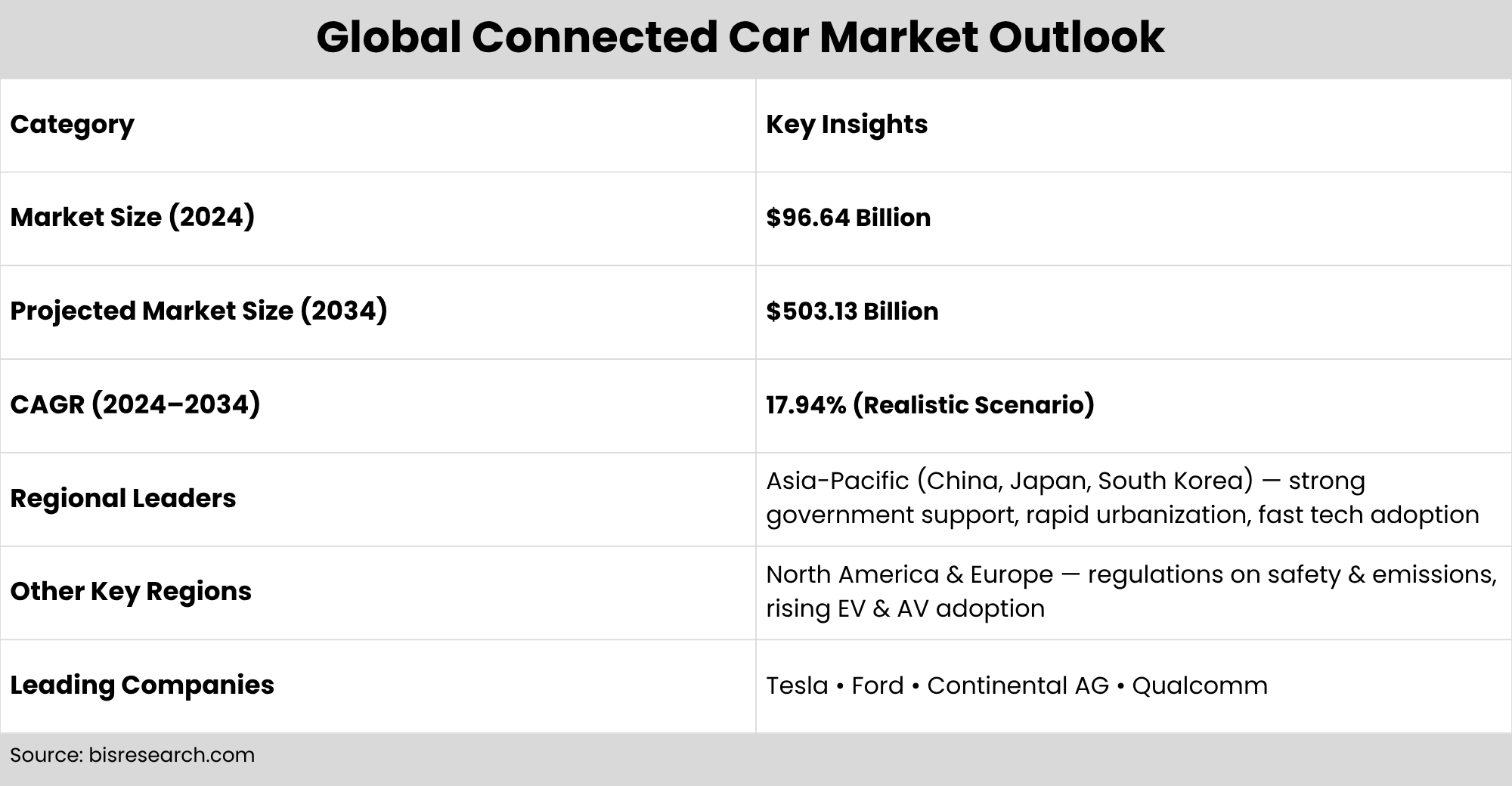
Connected cars have evolved into intelligent, software-defined platforms that communicate with infrastructure, devices, and the cloud. By 2025, almost every new vehicle sold in major markets comes equipped with advanced connectivity features—enabling real-time data exchange, predictive intelligence, enhanced safety, and a seamless digital driving experience. This shift is transforming vehicles from standalone machines into fully integrated components of a wider mobility ecosystem.
From 2024–2025, rapid growth in connectivity technologies has accelerated commercial adoption:
In-car AI assistants, powered by generative AI, became mainstream for navigation, infotainment, and vehicle control.
Outcome: Connected cars are now viewed as digital service platforms, not just transportation tools.
Explore More on Market Trend and Growth
[Download Sample Report]
Today’s connected vehicles rely on an advanced digital stack including:
These technologies enable continuous improvement, smarter decision-making, and personalized user experiences.
Connected vehicles play a major role in sustainability, safety, and operational efficiency:
Connected car ecosystems ultimately support a data-driven, low-emission, and safer mobility environment.
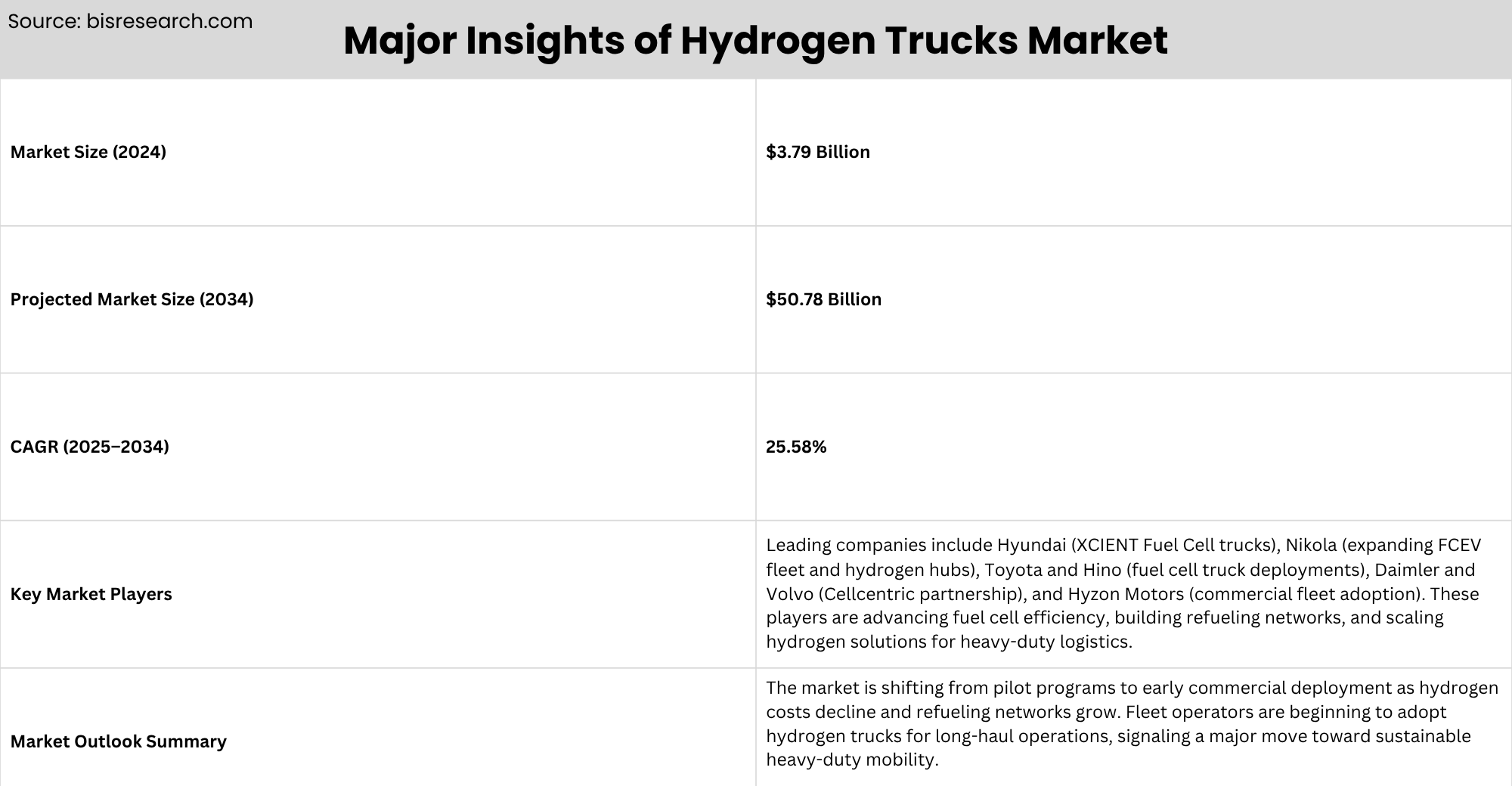
Hydrogen-powered trucks are rapidly gaining momentum as a clean, scalable alternative for long-haul and heavy-duty freight. By 2025, major OEMs and energy companies have accelerated hydrogen truck deployments across logistics corridors, industrial zones, and cross-border routes. With fast refueling times, high energy density, and long-range capability, hydrogen trucks fill the critical gap where battery-electric vehicles face limitations, especially in demanding, high-load, long-distance operations.
What Are the Latest Developments in Hydrogen Truck Adoption?
Between 2024–2025, global markets witnessed strong progress in hydrogen mobility:
Outcome: Hydrogen trucks are now moving from trial fleets to early-stage commercial logistics networks.
Explore More on Market Outlook and Trends
[Download Sample Report]
Today's hydrogen trucks feature:
These advancements deliver near zero emissions with high operational uptime.
Hydrogen mobility strengthens ESG outcomes across the logistics and heavy-duty transport sector:
Hydrogen trucks help companies meet net-zero commitments, reduce operational emissions, and transition to sustainable supply chains.
As EV adoption accelerates globally, Electric Vehicle Charging Management Software (CMS) has become the backbone of modern charging infrastructure. By 2025, charging networks are more complex, distributed, and digitally integrated than ever before. CMS platforms ensure these networks run smoothly optimizing charger uptime, enabling smart billing, managing energy loads, and improving user experiences across home, public, fleet, and workplace charging environments.
EV charging CMS platforms unify hardware, payments, energy management, and analytics into a single system. Core capabilities include:
These features ensure higher reliability, grid-friendly charging, and seamless customer experiences.
Explore More on Market Trends and Insights
[Download Sample Report]
From 2024–2025, CMS platforms have rapidly evolved due to rising EV adoption and grid digitization:
Trend: CMS platforms are shifting from simple charging controllers to smart energy management hubs.
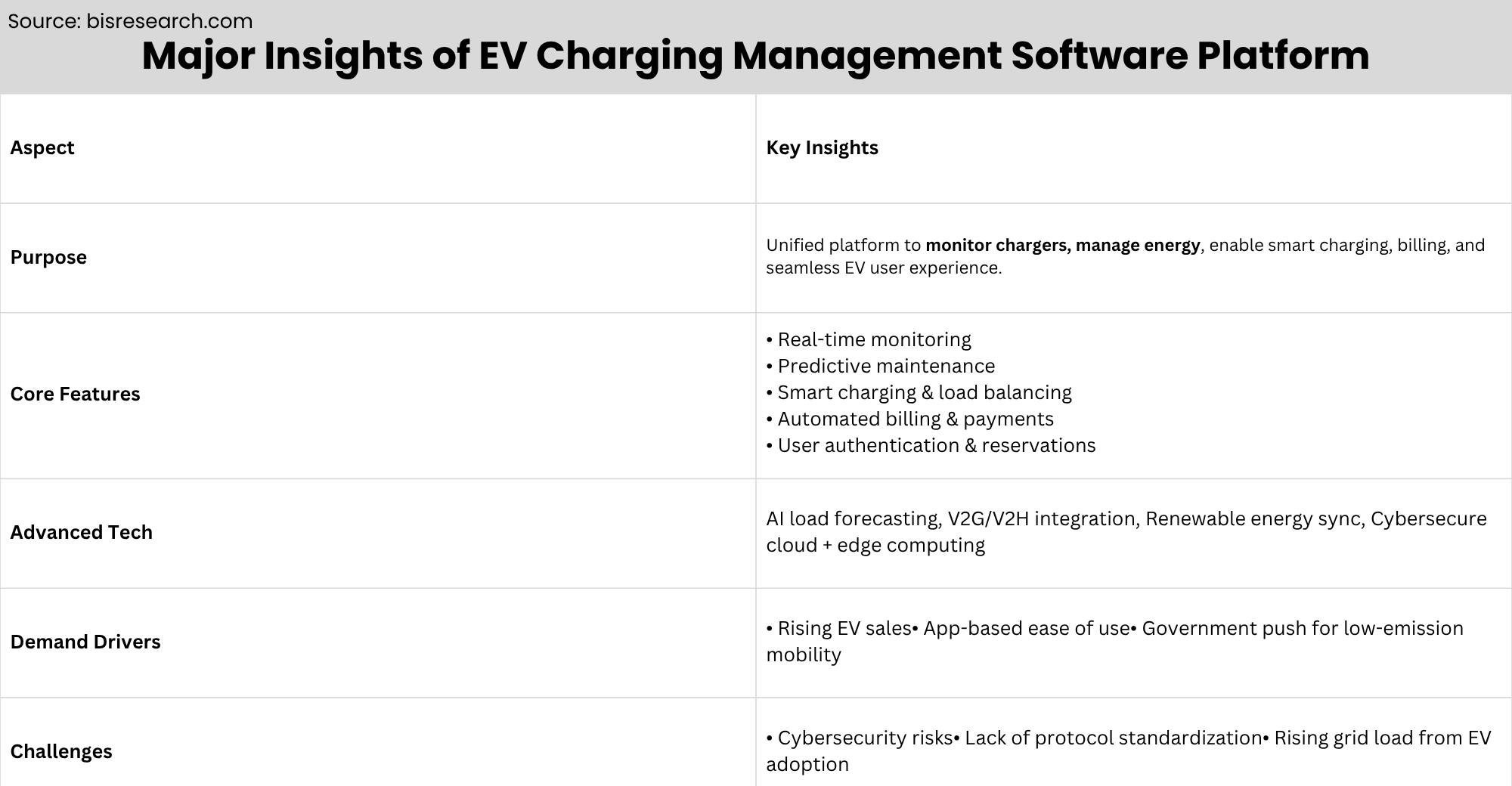
CMS platforms strengthen sustainability initiatives across the EV ecosystem:
By enabling smarter, cleaner energy flows, CMS platforms play a critical role in advancing global decarbonization.
Mobility-as-a-Service is emerging as one of the most transformative trends reshaping global transportation. By 2025, MaaS platforms integrate public transit, ride-hailing, micro-mobility, carsharing, and EV charging into a single, app-based interface—offering seamless travel planning and cashless payments. As cities push for cleaner, more efficient mobility, MaaS is enabling a shift away from private car ownership toward connected, multimodal, user-centric transportation.
Between 2024–2025, MaaS matured significantly across major urban hubs:
Impact: MaaS is evolving from a pilot concept into full-scale digital mobility ecosystems.
Explore More on Market Trends and Insights
[Download Sample Report]
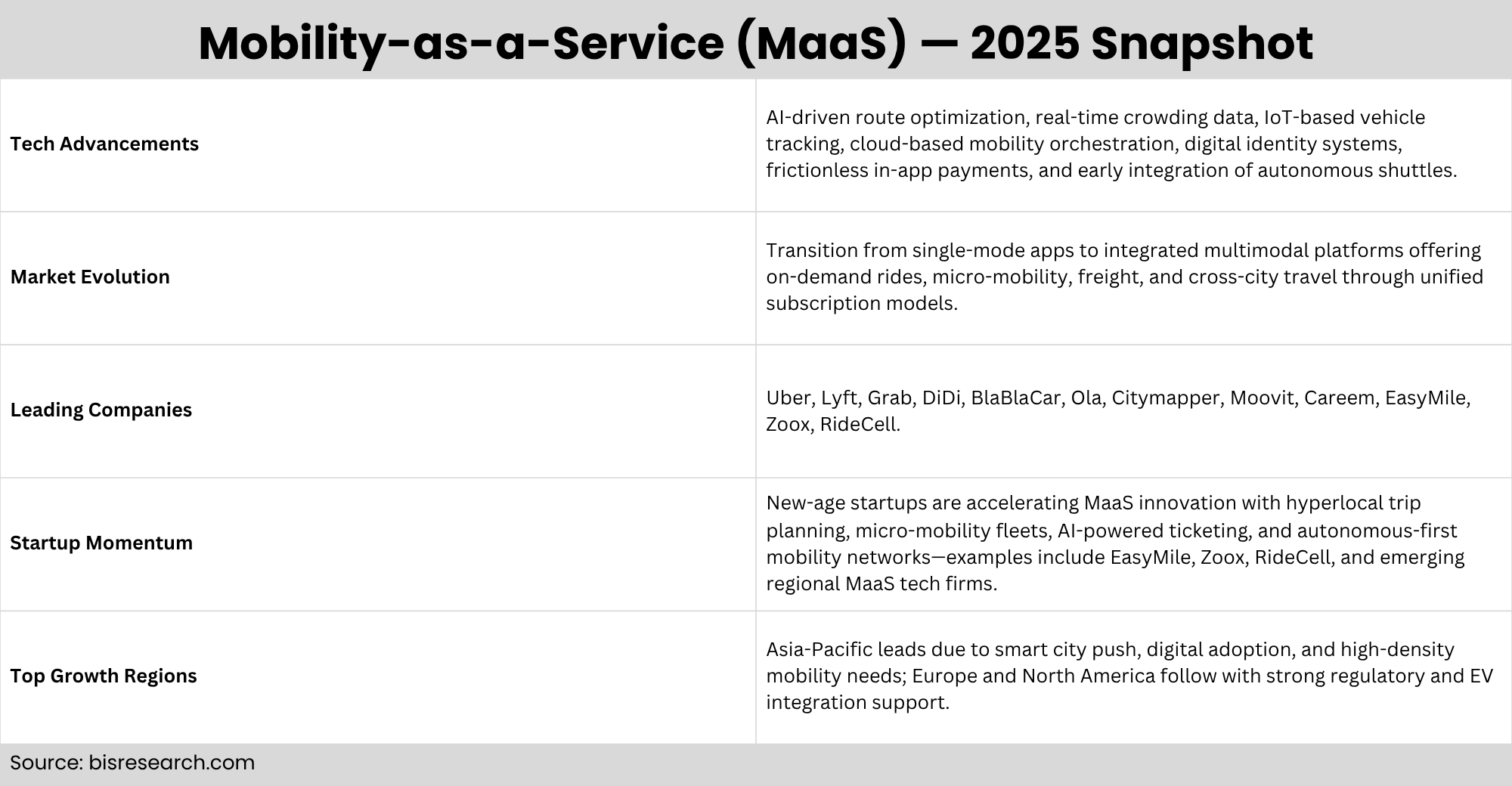
Next-generation MaaS systems use an advanced digital backbone:
Together, they deliver personalized, end-to-end mobility experiences.
MaaS is a key enabler of cleaner, smarter, and more inclusive cities:
MaaS contributes directly to net-zero goals, urban livability, and more efficient mobility ecosystems.
The future of mobility in 2025 marks a defining shift toward a cleaner, smarter, and more connected transportation ecosystem. Electrification, autonomous technologies, hydrogen-powered mobility, connected vehicle intelligence, and integrated digital platforms like MaaS are collectively reshaping how people and goods move across the world. With advancements in AI, battery innovation, V2X connectivity, smart charging software, and sustainable freight solutions, mobility is becoming safer, more efficient, and deeply user-centric. As governments, technology companies, and mobility operators continue to collaborate, the industry is accelerating toward a unified vision of zero-emission transport, intelligent automation, and seamless multimodal travel. Together, these breakthroughs are not only transforming mobility infrastructure but also laying the foundation for a more sustainable and resilient global transportation future.