
In the evolving healthcare landscape, procedure volume trends serve as a critical indicator of disease burden, technological adoption, and healthcare system priorities. Neurosurgery and gastroenterology two highly specialized yet distinct fields are witnessing notable shifts in procedural volumes driven by demographic changes, innovation, and clinical demand. This article explores a comparative analysis of these trends, offering actionable insights for healthcare stakeholders.
Contrasting Specialties, Converging Growth
Neurosurgery focuses on complex interventions involving the brain, spine, and nervous system, often requiring high precision and advanced technologies. Gastroenterology, on the other hand, deals with digestive system disorders, with a strong emphasis on diagnostic and minimally invasive procedures such as endoscopy.
Despite their differences, both specialties are experiencing steady growth in procedure volumes, albeit for different reasons:
- Neurosurgery: Rising neurological disorders and technological advancements
- Gastroenterology: Increasing prevalence of gastrointestinal diseases and screening programs
Explore surgical procedure volume database now!
Neurosurgery Procedure Volume Trends
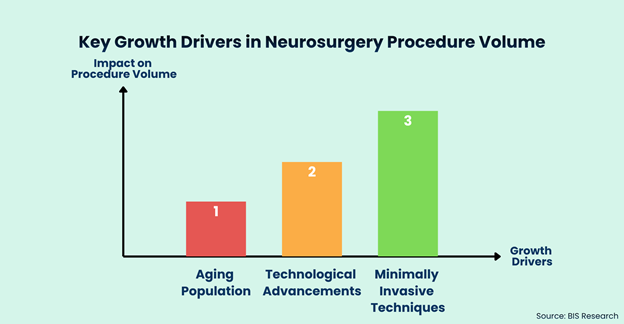
Key Growth Drivers
- Aging Population
The global rise in elderly populations has led to increased incidence of conditions such as brain tumors, Parkinson’s disease, and spinal disorders. - Technological Advancements
Innovations like robotic-assisted surgery, intraoperative MRI (iMRI), and neuronavigation systems are improving surgical outcomes and expanding procedural adoption. - Minimally Invasive Techniques
The shift toward less invasive neurosurgical procedures is reducing recovery times and encouraging higher patient acceptance.
Volume Dynamics
- High-value, low-frequency procedures
- Concentrated in specialized centers
- Strong dependence on capital-intensive infrastructure
According to insights derived from healthcare market intelligence studies, procedure volumes in neurosurgery are closely tied to technology adoption curves and hospital infrastructure readiness, particularly in advanced markets.
Looking for in-depth analysis on neurosurgery vs gastroenterology procedure trends? Request a customized report from BIS Research today.
Gastroenterology Procedure Volume Trends
Key Growth Drivers
- Rising GI Disorders
Increasing cases of colorectal cancer, inflammatory bowel disease (IBD), and liver disorders are fueling demand. - Screening Programs
Government-led colorectal cancer screening initiatives are significantly boosting colonoscopy volumes worldwide. - Outpatient & Ambulatory Shift
Many GI procedures are now performed in ambulatory surgical centers (ASCs), increasing accessibility and throughput.
Volume Dynamics
- High-frequency, lower-cost procedures
- Strong presence in outpatient settings
- Driven by preventive care and early diagnosis
Gastroenterology stands out for its scalable procedural model, where high patient turnover and standardized techniques enable consistent volume growth.
Comparative Analysis: Neurosurgery vs Gastroenterology
Parameter | Neurosurgery | Gastroenterology |
Procedure Frequency | Low | High |
Complexity | Very High | Moderate |
Setting | Tertiary hospitals | Hospitals & outpatient centers |
Technology Dependence | Advanced (robotics, imaging) | Moderate (endoscopy systems) |
Growth Driver | Innovation & aging population | Screening & disease prevalence |
Cost per Procedure | High | lower |
Schedule a quick call with our experts to explore neurosurgery and gastroenterology procedure insights tailored to your needs.
Regional Trends
- North America & Europe
Lead in neurosurgical innovation and high-end procedures due to strong healthcare infrastructure and reimbursement systems. - Asia-Pacific
Rapid growth in both specialties, driven by expanding healthcare access, rising awareness, and increasing investments. - Emerging Markets
Gastroenterology volumes are growing faster due to affordability and scalability, while neurosurgery remains limited by infrastructure constraints.
Emerging Trends Shaping the Future
- Integration of AI and Robotics
Both specialties are leveraging AI for diagnostics and robotic systems for precision, though adoption is faster in neurosurgery. - Shift Toward Value-Based Care
Emphasis on outcomes is influencing procedure selection and volume optimization. - Data-Driven Decision Making
Advanced analytics platforms are enabling hospitals to track procedural demand and optimize resource allocation. - Patient-Centric Care Models
Increasing focus on minimally invasive and outpatient procedures is boosting gastroenterology volumes more rapidly.
The future of procedure volumes across neurosurgery and gastroenterology will be shaped by technology, demographics, and healthcare policy. While neurosurgery will continue to grow as a high-value, innovation-driven field, gastroenterology is expected to dominate in terms of volume scalability and preventive care impact.
For healthcare providers, investors, and medical device companies, understanding these contrasting trends is essential for strategic planning, resource allocation, and market positioning.
For deeper insights into healthcare market trends, advanced technologies, and procedure volume analytics, explore surgical procedure volume database comprehensive intelligence solutions.