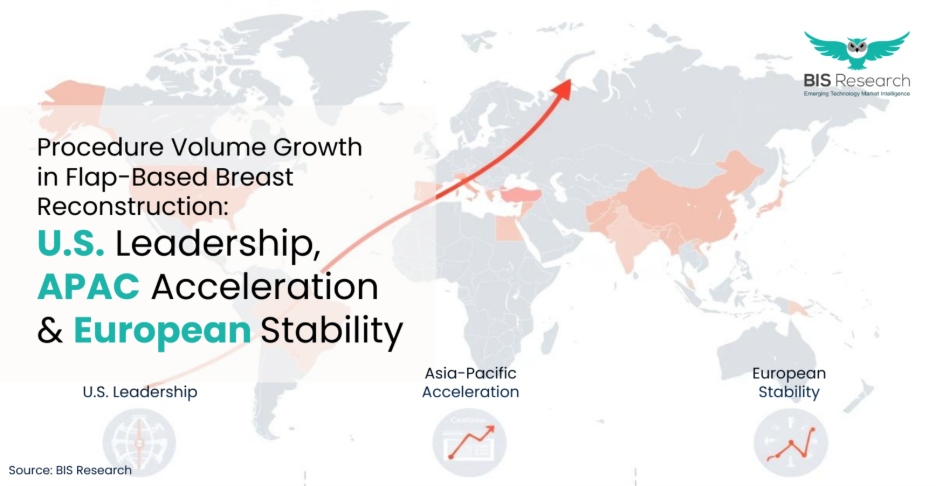
Breast reconstruction after mastectomy has undergone a profound evolution over the past decade. Among the most transformative developments is the increasing adoption of flap-based breast reconstruction, a procedure that uses a patient’s own tissue to rebuild the breast. But beyond clinical innovation, a crucial question is shaping the future of this field:
Where is procedural growth actually happening and what does that mean for healthcare innovators and medical device companies?
Understanding the geographic dynamics of flap-based reconstruction procedure volumes is now essential for developing effective go-to-market strategies, especially for advanced surgical technologies such as interventional imaging platforms, microsurgical tools, and operating room innovations. The answer reveals a fascinating global pattern: U.S. leadership, rapid APAC acceleration, and steady European stability.
Procedure volumes are more than just numbers they signal clinical adoption, healthcare investment, and surgical capability. For companies operating in reconstructive surgery ecosystems, tracking procedural growth helps answer key strategic questions:
• Which regions are investing in advanced reconstructive care?
• Where are surgeons adopting complex microsurgical techniques?
• How should companies prioritize commercialization and hospital partnerships?
As highlighted in industry insights such as the BIS Research analysis on procedural trends shaping surgical strategy, procedure volume growth often dictates where technology adoption will occur first and fastest.
In the case of flap-based breast reconstruction, regional patterns clearly illustrate how healthcare systems are evolving.
Explore the full insight here: Surgical Procedure Volume Database
The United States continues to dominate the global landscape of autologous breast reconstruction procedures, particularly those involving sophisticated flap techniques such as DIEP, TRAM, and perforator flaps.
Several structural advantages support this leadership:
Flap reconstruction requires highly specialized surgical training and hospital resources. The U.S. benefits from:
• Dedicated microsurgery centers
• Advanced operating room technologies
• High surgeon expertise in perforator flap techniques
Policies such as the Women’s Health and Cancer Rights Act (WHCRA) ensure insurance coverage for breast reconstruction following mastectomy. This dramatically increases patient access and procedure adoption.
Patients increasingly prefer flap procedures because they:
• Provide more natural aesthetic outcomes
• Avoid long-term implant complications
• Offer durable, lifelong results
As a result, the U.S. continues to generate the highest volume of flap-based breast reconstruction procedures globally, making it the most mature and technologically advanced market.
While the U.S. dominates in scale, Asia-Pacific (APAC) is emerging as the fastest-growing region for flap-based reconstruction procedures.
Countries such as Japan, South Korea, China, and Australia are seeing a notable rise in reconstructive surgery volumes, driven by several key trends.
Large investments in oncology and surgical infrastructure are enabling hospitals to perform more complex procedures, including microsurgical breast reconstruction.
Early detection programs and improved screening initiatives are expanding the pool of patients eligible for reconstruction.
Leading medical centers across APAC are actively investing in:
• Microsurgical training programs
• Advanced imaging technologies
• Enhanced surgical planning tools
As a result, APAC is becoming a critical expansion market for companies targeting reconstructive surgery technologies.
Europe presents a different narrative consistent procedural stability rather than explosive growth.
Many Western European countries already maintain well-established breast reconstruction programs, supported by strong public healthcare systems and comprehensive cancer care pathways.
Key characteristics of the European market include:
Countries such as Germany, France, and the U.K. have integrated reconstruction into breast cancer treatment protocols.
European surgeons often perform a balanced mix of:
• Implant-based reconstruction
• Flap-based reconstruction
Because many European systems are already mature, growth tends to occur through:
• incremental procedural increases
• technological upgrades
• improved patient awareness
This results in steady procedural demand rather than rapid expansion.
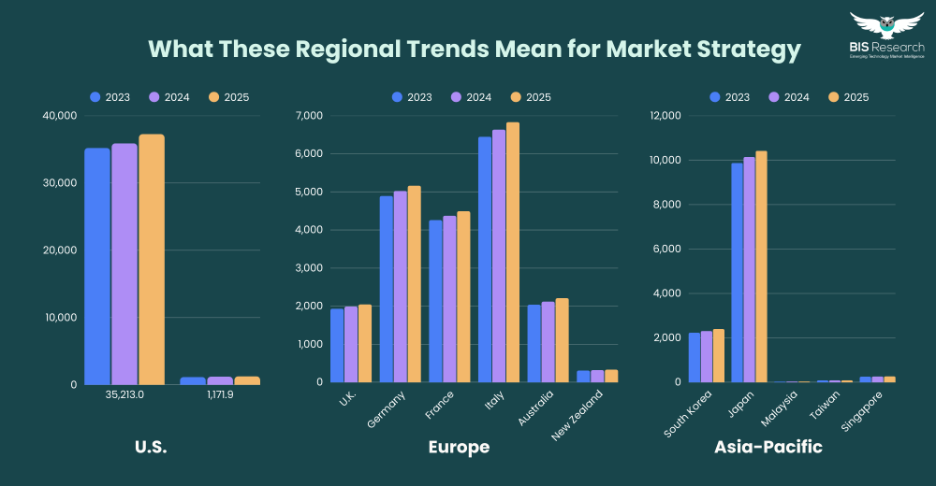
For companies operating in reconstructive surgery, the geographic distribution of procedure volumes offers a clear strategic roadmap:
Region | Market Characteristic | Strategic Opportunity |
United States | Largest procedural base | Technology adoption and innovation leadership |
Asia-Pacific | Fastest growth | Market expansion and surgeon training |
Europe | Stable and mature | Incremental technology upgrades |
Understanding these regional dynamics helps stakeholders align product launches, clinical partnerships, and commercialization strategies with where procedural demand is strongest.
Interested in deeper market insights?
Request a personalized quote to access the full research report and detailed market analysis- Request a quote now!
Looking ahead, flap-based reconstruction is expected to continue gaining momentum globally. Advances in microsurgery, imaging guidance, robotic assistance, and surgical planning technologies will further expand access to these complex procedures.
However, success in this evolving market will depend on one key factor: understanding where surgical procedures are actually growing.
The story is clear:
• The U.S. leads the world in procedural scale and innovation.
• APAC is rapidly accelerating as a growth frontier.
• Europe remains a stable and mature market with consistent demand.
For medical technology companies and healthcare innovators, recognizing these patterns is not just useful it is essential for shaping the next generation of reconstructive surgery solutions.