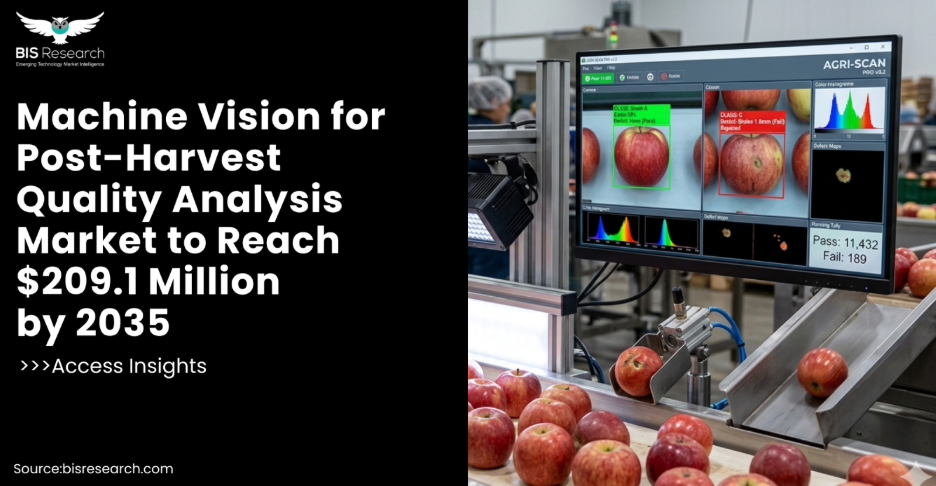
Machine vision for post-harvest quality analysis refers to the use of advanced imaging technologies, artificial intelligence, and automated systems to assess the quality of agricultural produce after harvesting. These systems leverage high-resolution cameras, hyperspectral imaging, and deep learning algorithms to detect defects, evaluate size, color, and shape, and ensure consistent grading of fruits, vegetables, grains, and other commodities.
With increasing consumer expectations for high-quality produce and stricter food safety standards, manual inspection methods are becoming inadequate. Machine vision enables real-time, non-destructive analysis, helping producers and processors minimize waste, improve operational efficiency, and ensure compliance with global export standards.
According to BIS Research, the machine vision for post-harvest quality analysis market was valued at $22.4 million in 2024 and is projected to reach $209.1 million by 2035, growing at a CAGR of 22.11%, highlighting its growing importance in modern agricultural supply chains.
Download the complete TOC and Request Sample Report
According to Principal Analyst at BIS Research: “The machine vision for post-harvest quality analysis market is experiencing strong growth as automation and data-driven inspection become integral to modern agricultural supply chains. The integration of AI, hyperspectral imaging, and cloud platforms is enabling producers, exporters, and cooperatives to standardize grading, reduce waste, and enhance traceability. Subscription-based and cloud-enabled models are gaining traction due to scalability and ease of deployment. While North America leads due to stringent quality standards and digital maturity, Asia-Pacific is emerging rapidly with increasing focus on export quality and post-harvest modernization. Continued innovation in real-time analytics and high-speed imaging will further accelerate adoption globally.”