Industrial heating systems are critical infrastructure components that provide controlled thermal energy for manufacturing and processing operations across industries such as chemicals, food and beverages, oil and gas, metals, power generation, pulp and paper, and textiles. These systems include boilers, furnaces, heat pumps, and other process-heating technologies that enable material transformation, chemical reactions, drying, melting, and sterilization under precise temperature conditions.
As industries pursue higher productivity, tighter quality control, and lower energy consumption, industrial heating systems are evolving from conventional fuel-based equipment into intelligent, digitally enabled solutions. Integration of IoT sensors, automation, predictive maintenance, and data-driven energy management is enabling real-time thermal control, reduced downtime, and optimized energy usage. These capabilities are increasingly essential as manufacturers modernize legacy infrastructure, comply with stricter emissions regulations, and advance toward decarbonized production models.
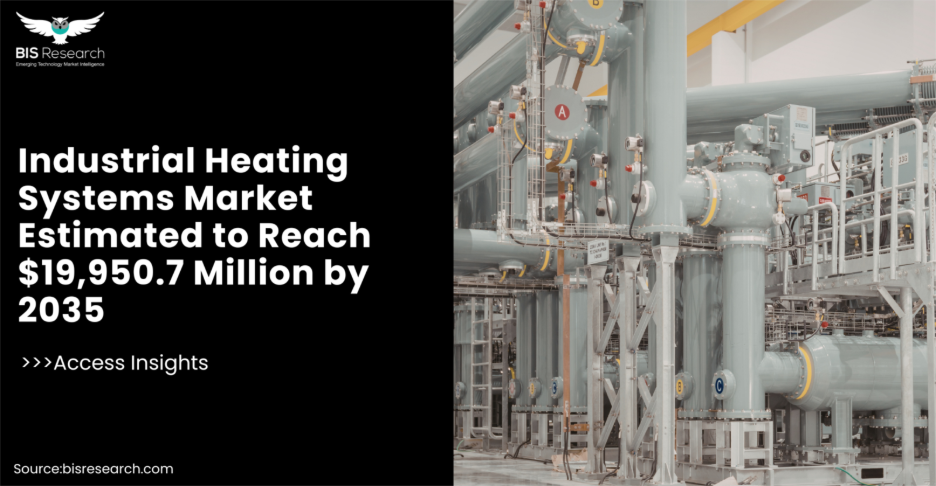
According to BIS Research, the global industrial heating systems market is projected to grow from $12,688.3 million in 2025 to $19,950.7 million by 2035, registering a CAGR of 4.63% during 2025–2035.
Access Insights on Industrial Heating Systems Market
Key Drivers:
• Rising Demand for Energy-Efficient and High-Reliability Process Heating
• Integration of IoT, Automation, and Predictive Maintenance Technologies
• Industrial Modernization and Capacity Expansion across Key End-Use Sectors
• Electrification of Industrial Thermal Processes
• Regulatory Pressure to Reduce Emissions and Energy Consumption
[Download Complete TOC or Request Sample Report]
By Application
• Food Processing
• Pulp and Paper
• Chemical
• Oil and Gas
• Metal and Mining
• Textiles
• Others
By Product Type
• Boilers
• Furnaces
• Heat Pumps
• Others
By Fuel Type
• Fossil Fuel
• Electric
By Region
• North America (U.S., Canada, Mexico)
• Europe (Germany, France, U.K., Italy, Rest-of-Europe)
• Asia-Pacific (China, Japan, India, South Korea, Australia, Southeast Asia)
• Rest-of-the-World (South America, Middle East, Africa)
The industrial heating systems market is undergoing a measured but structurally important transition toward electrified, automated, and digitally integrated thermal solutions. While fossil fuel-based systems continue to dominate due to their established infrastructure and high thermal output, electric heating technologies, smart boilers, and advanced heat pumps are steadily gaining traction as industries pursue decarbonization and energy optimization.
Over the next decade, growth will be shaped less by volume expansion and more by system upgrades, retrofits, and efficiency-driven replacements. IoT-enabled monitoring, predictive maintenance, and integration with plant-wide energy management platforms will increasingly differentiate suppliers. Although high capital costs remain a constraint, tightening regulations and long-term energy savings are expected to sustain investment momentum, positioning industrial heating systems as foundational enablers of modern, low-carbon manufacturing.
-BIS Research Analyst Team
BIS Research offers KOL-based insights, rigorous segmentation, and strategic advisory across software, hardware, and sensing tech domains.
Get deeper, tailored insights with a customized report designed around your market, technology focus, and strategic goals.