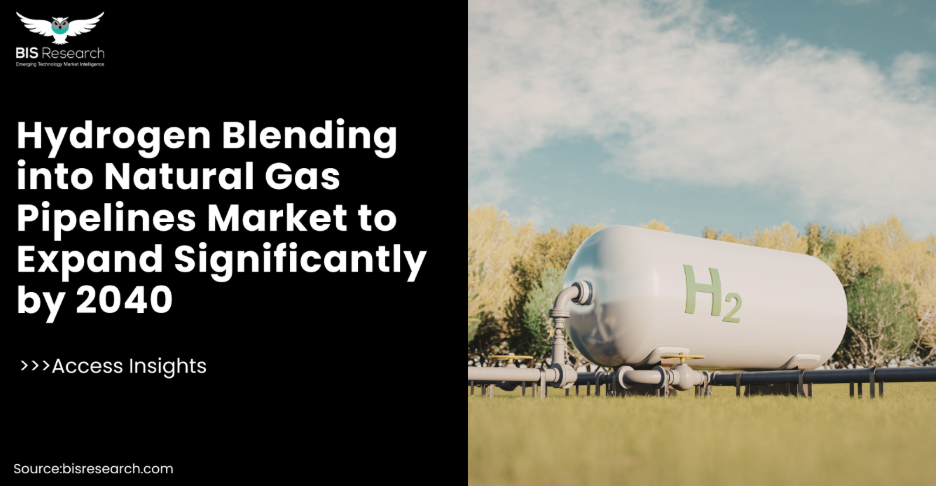
Hydrogen blending into natural gas pipelines refers to the process of mixing hydrogen with conventional natural gas to create a lower-carbon fuel that can be transported through existing pipeline infrastructure. This approach enables energy systems to gradually transition toward cleaner fuels without requiring entirely new infrastructure.
This concept has gained traction due to its dual advantage. It reduces greenhouse gas emissions while allowing utilities to leverage existing gas networks, minimizing capital expenditure. As countries move toward net-zero targets, hydrogen blending is increasingly seen as a practical bridge between fossil fuels and fully renewable energy systems.
Hydrogen, as a low-carbon energy carrier, plays a critical role in decarbonizing hard-to-abate sectors such as heating, industrial processes, and power generation. With supportive policy frameworks and technological advancements, hydrogen blending is emerging as a key strategy in global energy transition efforts.
Know more about this market now!
Key Drivers:
• Increasing global pressure to reduce carbon emissions and meet climate targets
• Strong government support through hydrogen roadmaps, subsidies, and regulatory frameworks
• Cost-effective utilization of existing natural gas pipeline infrastructure
• Growing demand for cleaner fuels across industrial, residential, and power sectors
• Expansion of pilot projects demonstrating technical feasibility and scalability
• Rising investments in hydrogen production and distribution technologies
Key Challenges:
• Technical constraints in pipelines when handling higher hydrogen concentrations
• Safety risks due to hydrogen’s low density and high flammability
• High costs of green hydrogen production and infrastructure upgrades
• Lack of uniform global standards and regulatory clarity for blending limits
• Material compatibility issues leading to potential pipeline degradation
• Economic uncertainty in scaling projects to commercial levels
By Application
• Power Generation
• Transportation
• Industrial
• Agriculture
• Others
By Hydrogen Blend
• Up to 5%
• 5% to 20%
• Above 20%
By Region
• North America
• Europe
• Asia-Pacific
• Rest-of-the-World
According to Principal Analyst at BIS Research:
“The hydrogen blending into natural gas pipelines market is expected to witness steady growth as countries accelerate their transition toward low-carbon energy systems. The ability to integrate hydrogen into existing infrastructure provides a cost-effective pathway for decarbonization. While technical and economic challenges remain, continued policy support and technological innovation will play a crucial role in scaling hydrogen adoption globally.”
What is the expected growth outlook?
The market is projected to expand steadily through 2040, supported by increasing policy support, pilot projects, and the global push toward decarbonization.
Which regions are leading adoption?
Europe is currently at the forefront, driven by strong regulatory frameworks and hydrogen strategies, followed by North America and Asia-Pacific.
What blending levels are most common?
Blending levels up to 20% are currently the most widely tested and implemented, as they require minimal infrastructure modifications while ensuring safety.
Want to Make Data-Backed Moves in the Hydrogen Energy Market?
BIS Research provides expert-driven insights, granular segmentation, and strategic advisory across energy transition, hydrogen, and clean technology domains.
Book a Preview