
As healthcare systems worldwide undergo structural, technological, and demographic transformation, surgery has emerged as one of the most data-intensive and strategically critical domains. From aging populations and rising chronic disease burden to the rapid adoption of minimally invasive and robotic techniques, the global surgical ecosystem is evolving at an unprecedented pace. In this environment, global surgical intelligence, grounded in accurate, procedure-level volume data has become essential for stakeholders seeking clarity, foresight, and competitive advantage.
The Global Surgical Procedure Volume Database by BIS Research is designed to address this need. It provides a comprehensive, standardized view of surgical activity across regions, specialties, and care settings, enabling stakeholders to move beyond high-level market assumptions toward evidence-based decision-making. Covering hundreds of surgical procedures across major therapeutic areas, the database delivers historical volumes, current benchmarks, and multi-year forecasts, offering a reliable foundation for understanding how and where surgical demand is truly evolving.
Surgical markets are shaped not only by clinical need, but also by reimbursement structures, hospital capacity, surgeon adoption patterns, and technology penetration. As a result, aggregate market sizing often masks critical variation at the procedure level. Granular surgical intelligence reveals these hidden dynamics; highlighting which procedures are growing, which are shifting from inpatient to outpatient settings, and where advanced technologies such as robotic assistance or image-guided surgery are gaining traction. This level of insight is indispensable for medical device manufacturers, digital health companies, and life sciences organizations aligning product portfolios with real-world clinical demand.
Beyond industry players, healthcare providers and hospital networks increasingly rely on procedure volume intelligence to support capacity planning, capital investment decisions, and service line optimization. Consultants and investors use surgical volume trends to assess market attractiveness, validate growth hypotheses, and model long-term demand scenarios with greater precision. By integrating regional, specialty-specific, and care-setting segmentation, global surgical intelligence enables stakeholders to evaluate opportunities through both a macro and micro lens.
What differentiates BIS Research’s approach is its focus on data credibility, methodological rigor, and usability. Surgical volumes are derived and validated using a combination of hospital data, national health statistics, reimbursement datasets, and expert insights, ensuring consistency across geographies and time horizons. The result is not just a dataset, but a strategic intelligence platform that translates complex surgical activity into actionable market insight.
In an era where success in healthcare increasingly depends on understanding procedural reality rather than theoretical potential, global surgical intelligence stands as a cornerstone for informed strategy, smarter investments, and sustainable growth.
Explore More on SPVD for your Organization Growth Contact BIS Research
Schedule a Call Now
By 2025, surgical robotics has progressed beyond its early niche to reshape surgery on a global scale. What was once confined to elite hospitals is now widespread across North America, Europe, Asia-Pacific, and select emerging markets. Next-generation surgical robotics platforms integrate artificial intelligence (AI), real-time 3D imaging, and networked hospital systems, enabling more precise navigation and decision support during complex procedures. These advancements are not limited to mechanical precision—robotic systems now offer AI-assisted suturing, automated instrument positioning, and predictive workflow guidance, elevating surgical outcomes and consistency across surgeon experience levels.
Startups such as CMR Surgical (UK) with its Versius® Surgical Robotic System have championed modular, cost-effective designs that compete with legacy players. Memic Innovative Surgery (US/Israel) is another key innovator, advancing Homer® robotic platform for versatile access in general surgery. Equity and venture investment into these players reflect strong demand for competitive, scalable systems beyond traditional incumbents.
A major trend supporting global adoption is open APIs and third-party tool development, creating ecosystems where procedure-specific applications can be rapidly deployed. Miniaturized instruments and sensor fusion technologies enable less invasive approaches, reducing recovery times and hospital stays.
Get to Know More About Surgical Robotics Market Download Sample Report
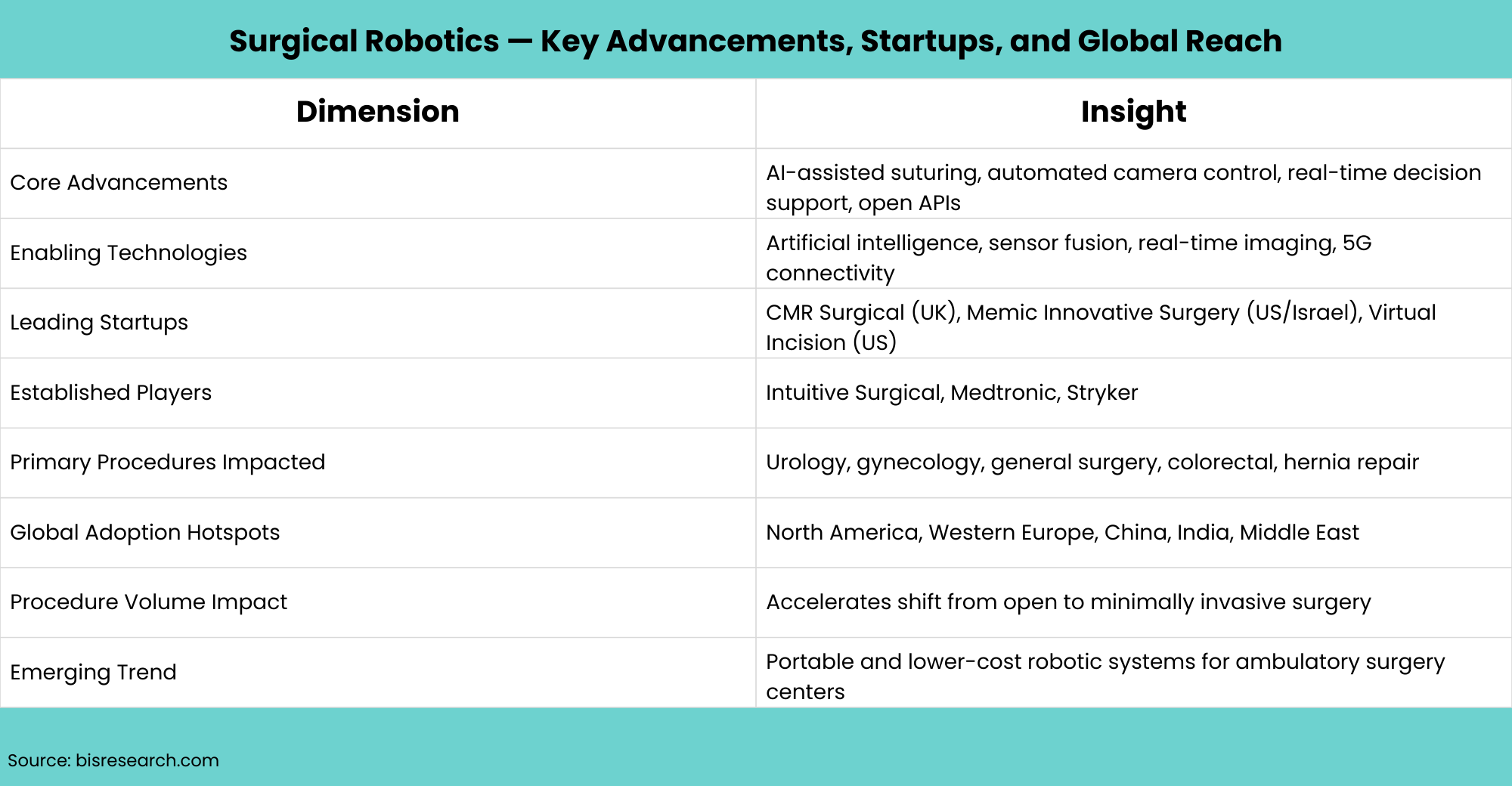
Emerging markets such as India, Brazil, and Middle Eastern states are also increasing surgical robotics capacity, driven by affordable solutions and training partnerships. Tele-robotic surgery, supported by 5G low-latency networks, facilitates remote mentorship and collaborative surgery across continents. Altogether, advancements in AI, connectivity, and modular design are transforming surgical robotics from high-end luxury into a global surgical staple, expanding its impact on worldwide procedure volumes and clinical outcomes.
Minimally invasive surgical (MIS) systems represent a convergence of advanced imaging, connectivity, and smart instrumentation that collectively drive better clinical outcomes and procedural efficiency. These systems are now standard across multiple regions, with adoption rising rapidly in North America, Europe, East Asia, and select Middle Eastern and Latin American markets. MIS platforms feature AI-guided navigation, augmented reality (AR) overlays, and 3D imaging integration, which enhance intraoperative visualization and precision for surgeons.
Innovation has accelerated thanks to players like Intuitive Surgical (US) with the da Vinci Xi System, and Stryker (US) with its Mako® robotic arm–assisted solutions, both integrating real-time feedback and adaptive energy devices. Startups such as Titan Medical (Canada) and Virtual Incision (US) are advancing compact robotic MIS approaches designed specifically for ambulatory surgery centers and community hospitals. These technologies allow complex procedures to be performed through smaller incisions, leading to reduced hospitalization and faster recovery.
Get to Know More About Minimally invasive surgery Market Growth and Insights
Download Sample Report
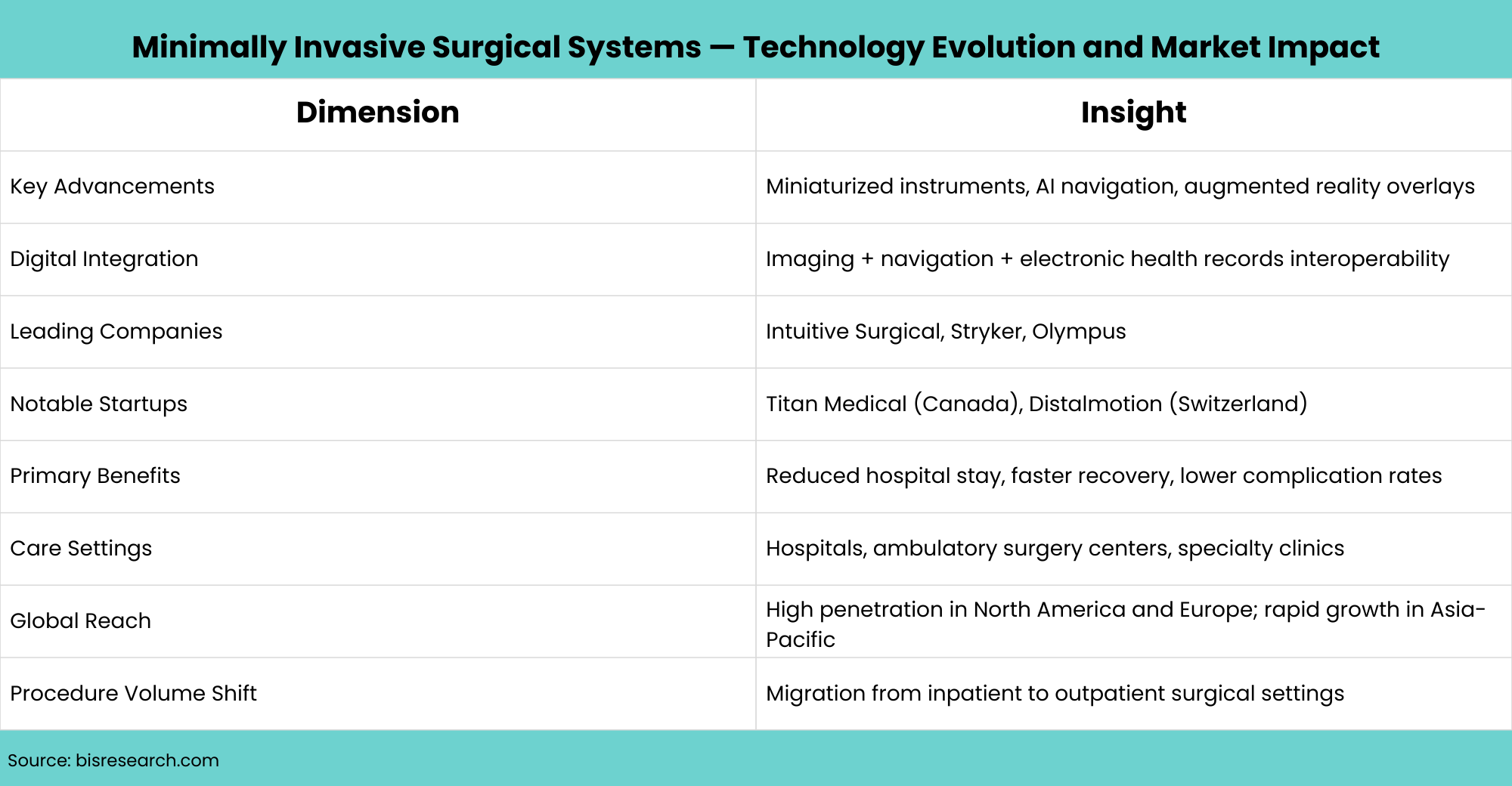
Closed-loop fluid management systems and personalized preoperative planning using 3D simulation have become routine, reducing intraoperative risk and optimizing surgical decision-making. Interoperability standards now enable seamless integration between imaging, navigation, and electronic health records (EHRs), creating a connected surgical ecosystem.
Cloud-connected MIS devices provide remote diagnostics, automated troubleshooting, and continuous software updates that accelerate adoption of best practices globally. Training technologies—such as VR/AR simulation and procedural analytics, are enhancing surgeon proficiency at scale, especially in markets with limited access to high-volume specialty centers. As MIS platforms evolve, they not only expand the therapeutic reach of minimally invasive techniques but also contribute significantly to growing global surgical procedure volumes and improving patient safety.
Interventional ultrasound has emerged as a frontline procedural imaging tool, widely deployed across hospitals, imaging centers, and outpatient facilities globally. Advances in high-resolution imaging, elastography, contrast-enhanced techniques, and AI-driven guidance have transformed ultrasound from a diagnostic modality into a real-time procedural guide. These capabilities have expanded its use in biopsies, tumor ablations, vascular access, pain management, and other minimally invasive interventions.
Organizations like GE Healthcare (US) and Philips (Netherlands) lead with next-generation ultrasound platforms that offer unparalleled tissue differentiation and seamless integration with procedure navigation systems. Startups such as Butterfly Network (US), with its portable, AI-enabled handheld ultrasound—are democratizing access to sophisticated imaging in community clinics and resource-limited regions. SuperSonic Imagine (France) is another innovator advancing high-resolution elastography for tissue characterization during interventions.
Enhanced needle-tracking, fusion imaging technology (blending real-time ultrasound with CT/MRI data), and portable wireless probes have drastically improved procedural accuracy and safety. These innovations reduce reliance on ionizing radiation and expand the settings where guided procedures can be performed—including outpatient and ambulatory surgery centers.
Get to Know More About Interventional Ultrasound Market Growth and Insights
Download Sample Report
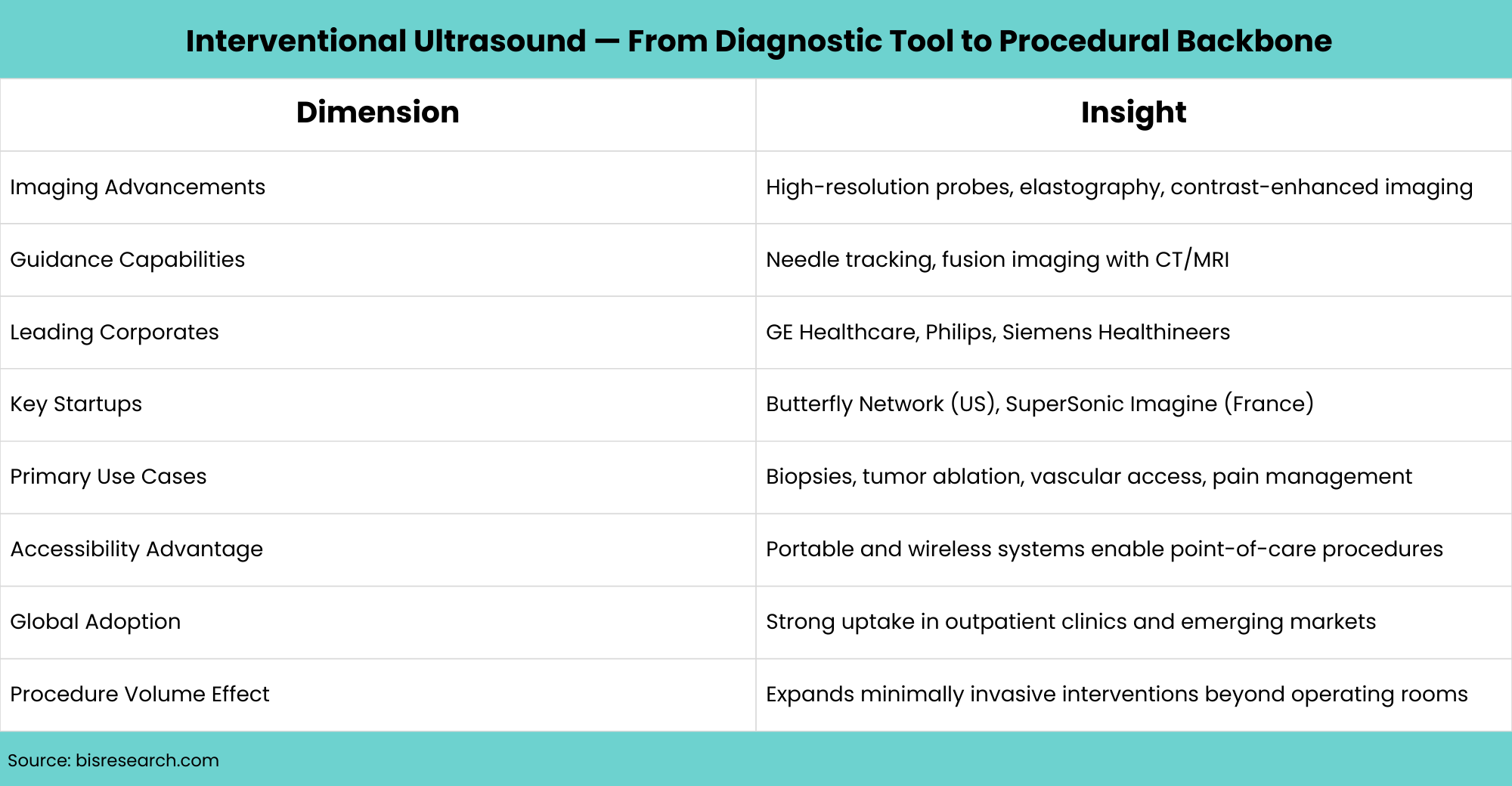
AI-powered workflow tools streamline capture, interpretation, and automated documentation, saving clinician time and increasing throughput. Tele-ultrasound platforms extend specialist support to remote locations, improving diagnostic confidence and outcomes across geographies.
The increasing portability, safety profile, and cost efficiency of interventional ultrasound have made it indispensable across surgical and interventional specialties. Its widespread adoption is now a significant contributor to global procedure volume trends, particularly in oncology, musculoskeletal care, and vascular interventions.
The convergence of surgical robotics and magnetic resonance imaging (MRI) has reached new heights by 2025, driven by advances in material science, sensor technologies, and AI-guided imaging systems. MRI-compatible surgical robots are purpose-built to operate safely inside strong magnetic fields, using fiber-optic sensing, piezoelectric actuation, and wireless control systems that avoid interference and preserve image fidelity.
Key players in this domain include Soteria Medical (US) and Neuromate (France), whose platforms focus on high-precision, MRI-guided procedures in neurosurgery and spinal interventions. These systems leverage AI-augmented imaging analysis to support trajectory planning, automated error correction, and adaptive motion control as anatomy shifts during surgery. Digital twin technologies, virtual patient models updated in real time, allow surgeons to anticipate anatomical changes and optimize outcomes mid-procedure.
Get to Know More About Magnetic Resonance Imaging Market Growth and Insights
[Download Complete TOC]
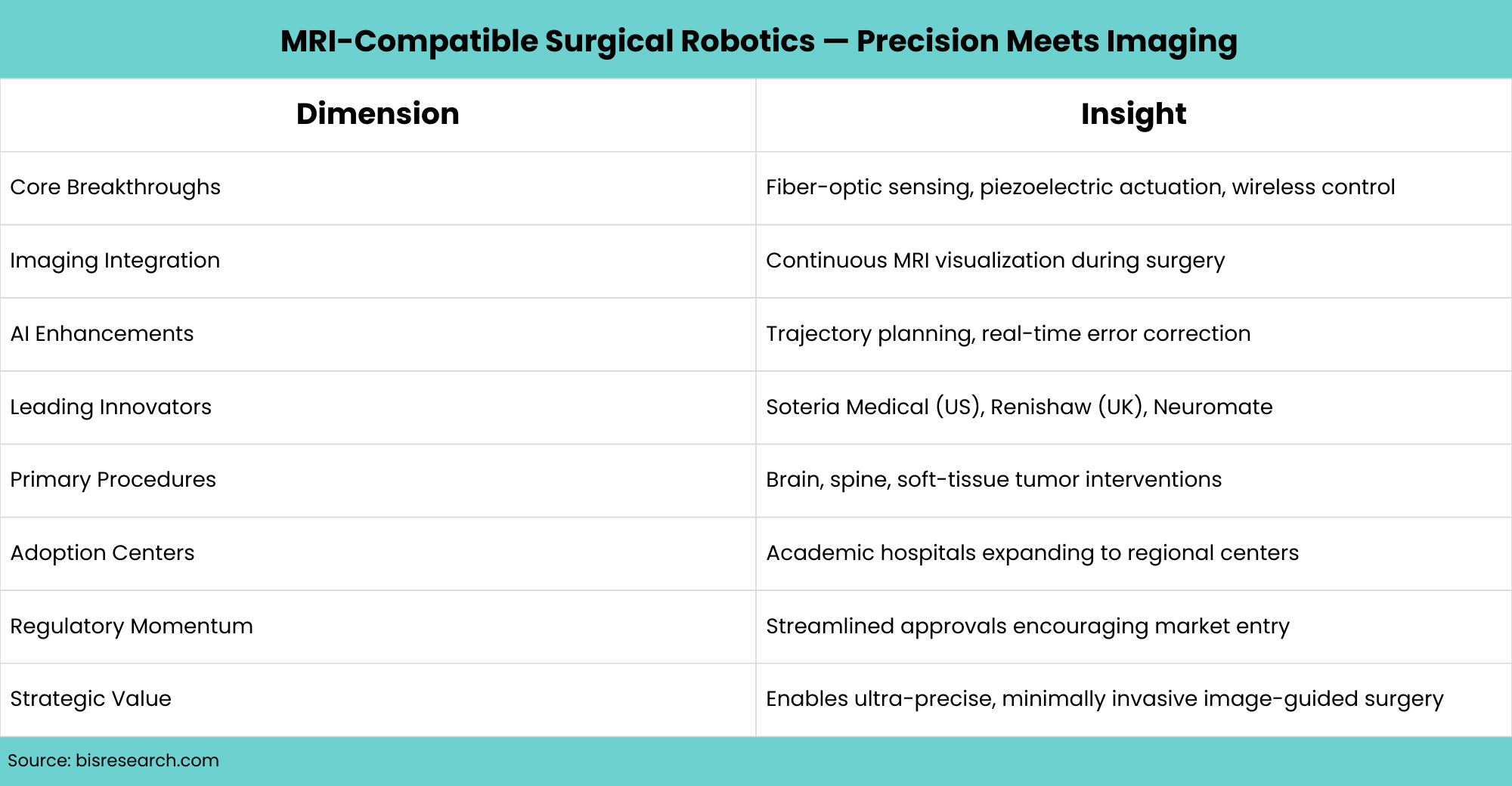
The adoption of MRI-compatible robotics is expanding beyond elite academic medical centers into leading regional hospitals in North America, Europe, and Asia, supported by streamlined regulatory pathways that encourage competition and innovation. Portable MRI-safe robotic units are emerging as viable options for broader clinical deployment, widening access to advanced image-guided care.
These breakthroughs are setting new standards for precision, safety, and minimally invasive therapy, particularly for brain, spine, and deep soft-tissue procedures. As a result, MRI-compatible surgical robotics platforms are influencing surgical practice patterns and contributing to a new class of image-guided interventions within global procedural volumes and market growth forecasts.
Learn More on Surgical Procedure Volume Database
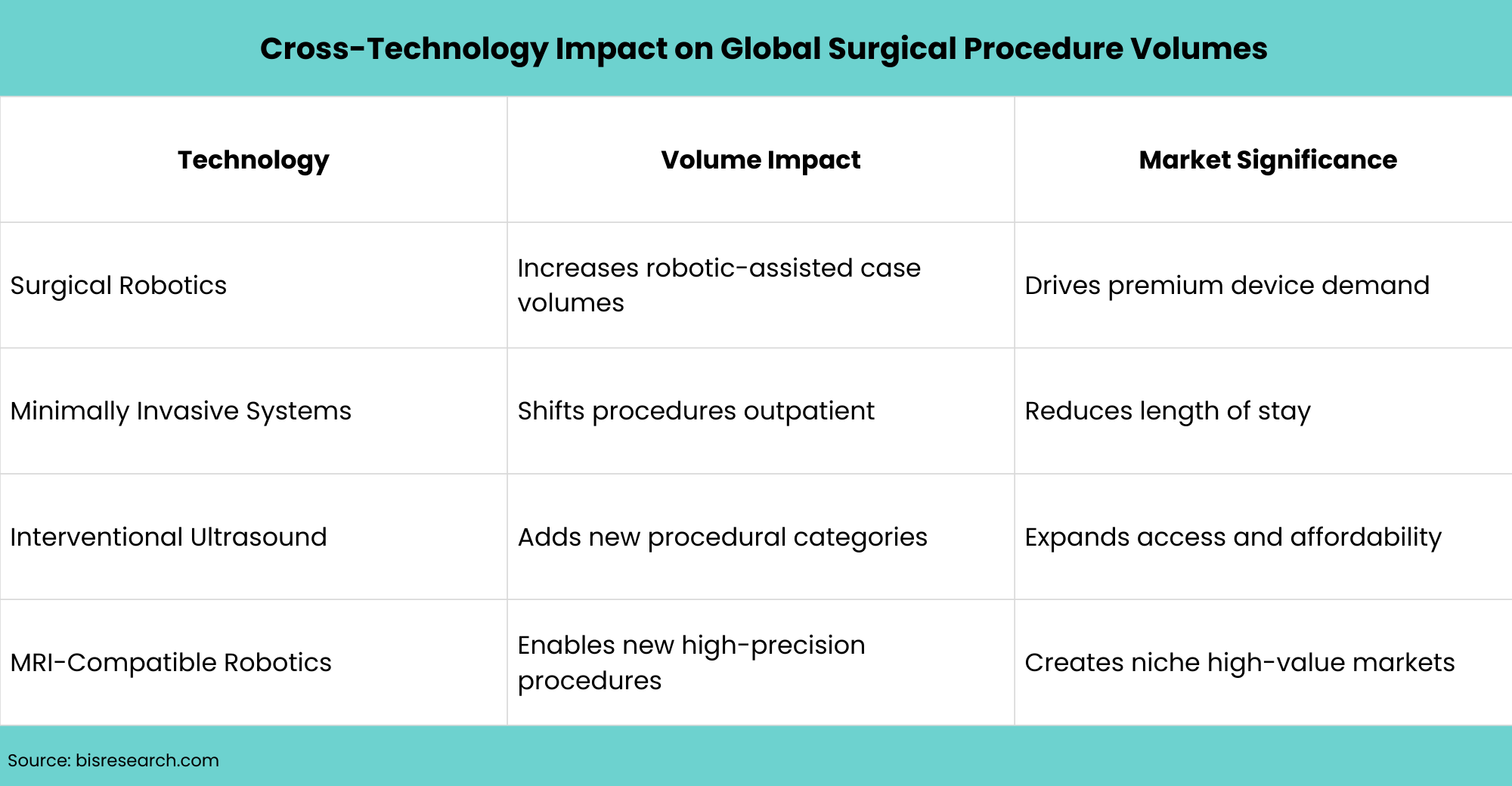
As global healthcare systems continue to evolve in complexity and scale, surgical care is increasingly shaped by the interplay between technology adoption and procedure-level demand dynamics. By 2025, advancements in surgical robotics, minimally invasive surgical systems, interventional ultrasound, and MRI-compatible robotic platforms are no longer incremental innovations—they are structural forces redefining how surgery is delivered worldwide. These technologies are directly influencing where procedures are performed, how complex interventions are managed, and how rapidly new surgical techniques achieve global adoption.
What unites these diverse technology domains is their measurable impact on surgical procedure volumes. Robotic systems are accelerating the transition from open to minimally invasive surgery, while compact and cost-efficient platforms are enabling expansion into ambulatory and regional care settings. Minimally invasive surgical systems are driving outpatient migration and improving procedural throughput. Interventional ultrasound is broadening access to image-guided interventions beyond traditional operating rooms, and MRI-compatible robotics is creating entirely new categories of high-precision, image-guided procedures.
In this environment, global surgical intelligence grounded in accurate, procedure-level volume data becomes indispensable. Aggregate market estimates alone are insufficient to capture the nuanced shifts occurring across specialties, regions, and care settings. The Global Surgical Procedure Volume Database by BIS Research provides the clarity needed to connect technology adoption with real-world procedural demand, enabling stakeholders to identify growth pockets, anticipate care-setting transitions, and align strategies with clinical reality.
Ultimately, organizations that leverage granular surgical intelligence will be best positioned to navigate market complexity, allocate capital effectively, and support innovation that aligns with evolving surgical practice. In a data-driven surgical economy, understanding procedure volumes is no longer optional; it is foundational to sustainable growth and competitive advantage.