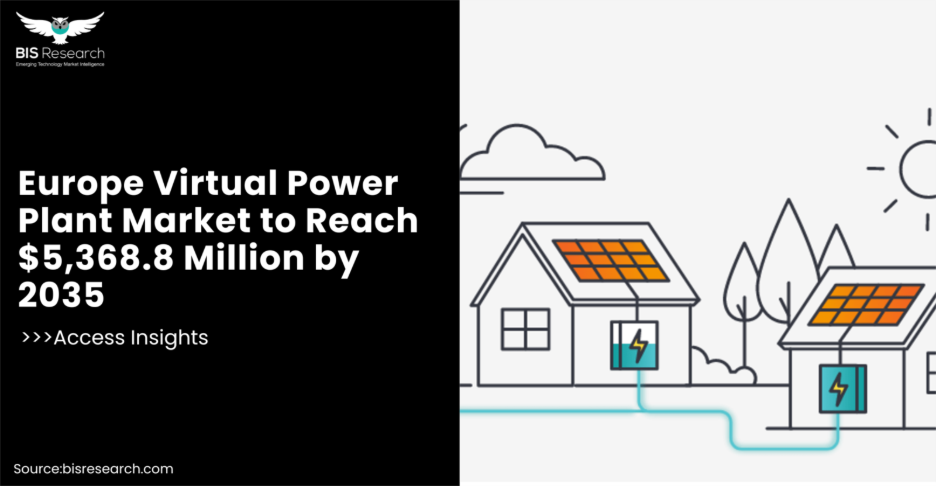
A virtual power plant (VPP) is a digitally orchestrated system that aggregates distributed energy resources such as rooftop solar PV, battery energy storage, electric vehicle chargers, smart appliances, and flexible industrial loads into a single, dispatchable power entity. Unlike traditional centralized power plants, VPPs rely on advanced software platforms to monitor, forecast, and control energy assets in real time.
As Europe accelerates its transition toward decentralized and low-carbon power systems, VPPs are emerging as a critical solution for maintaining grid stability and reliability. The rapid rise in renewable energy penetration, widespread electrification of transport and heating, and increasing grid congestion have intensified the need for fast, flexible balancing mechanisms. Virtual power plants enable utilities, transmission system operators (TSOs), distribution system operators (DSOs), and energy aggregators to enhance grid resilience, optimize energy flows, and delay costly network infrastructure upgrades.
According to BIS Research, the Europe virtual power plant market was valued at $1,221.0 million in 2024 and is projected to reach $5,368.8 million by 2035, growing at a CAGR of 14.48% during the forecast period 2025–2035, highlighting the expanding role of software-driven grid flexibility across the region.
Explore the full TOC and Book a preview
Key Drivers:
Rapid growth of distributed energy resources, particularly rooftop solar PV and behind-the-meter battery storage across residential and commercial sectors
• High penetration of intermittent renewable energy sources creating strong demand for flexible, real-time grid balancing solutions
• Ambitious EU decarbonization, climate, and energy security targets supporting demand-side flexibility and distributed generation
• Increasing pressure on TSOs and DSOs to defer capital-intensive grid upgrades while maintaining system reliability and resilience
• Declining costs of solar PV, battery storage, and smart energy devices improving overall VPP project economics
• Policy support for demand response programs, capacity markets, and ancillary services across major European economies
• Growing digitalization of power networks and rollout of smart grid and advanced metering infrastructure
According to a Principal Analyst at BIS Research:
“The Europe virtual power plant market is entering a phase of accelerated growth as power systems increasingly depend on digital flexibility to manage renewable integration and electrification. Software-driven aggregation of distributed energy resources will become central to grid operations, enabling cost-effective balancing and enhanced resilience. While regulatory fragmentation and cybersecurity challenges persist, sustained policy support, advancing technologies, and mounting grid stress position virtual power plants as a cornerstone of Europe’s future decarbonized energy landscape.”
The Europe virtual power plant market is expected to grow from $1,221.0 million in 2024 to $5,368.8 million by 2035, registering a CAGR of 14.48% during the forecast period 2025–2035.
Key drivers include high renewable energy penetration, strong EU decarbonization policies, rising electrification of transport and heating, falling technology costs, and increasing demand for grid flexibility.
Mixed-asset virtual power plants and demand response platforms are gaining significant traction, supported by advanced software, AI-driven analytics, and real-time energy management systems.
Leading companies operating in the market include Statkraft AS, Next Kraftwerke GmbH, Enel X S.r.l., Flexitricity, sonnenGroup, Octopus Energy, and EDF Energy.
BIS Research delivers expert-led insights, detailed market segmentation, and strategic advisory services to help stakeholders capitalize on opportunities in Europe’s rapidly evolving virtual power plant ecosystem.
[Contact Analyst]
[Download TOC]