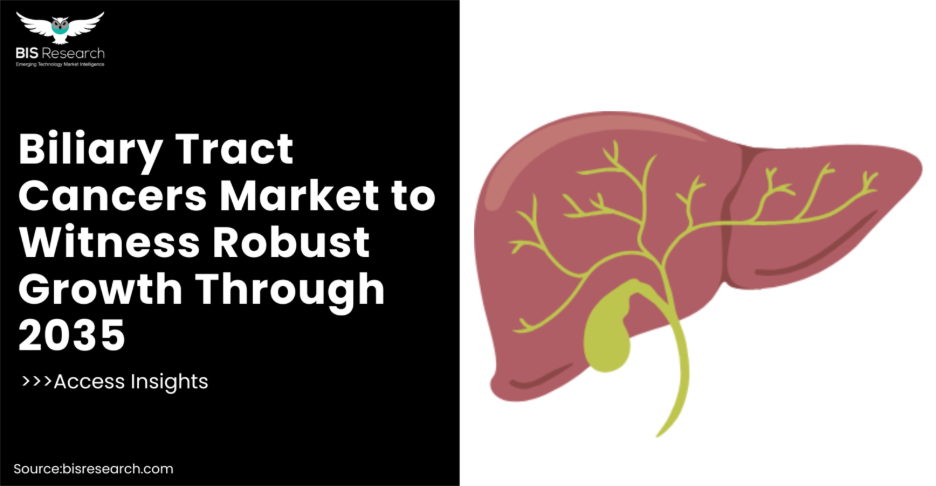
Biliary tract cancers (BTCs) include a group of rare but aggressive malignancies such as intrahepatic cholangiocarcinoma, extrahepatic cholangiocarcinoma, and gallbladder cancer. These cancers often go undetected until late stages due to subtle symptoms, making treatment outcomes challenging.
The global burden of BTCs continues to increase, largely driven by risk factors such as chronic hepatitis infections, primary sclerosing cholangitis, and liver fluke infestations. This trend highlights the rising need for earlier detection and more effective treatment options.
The adoption of molecular diagnostics and next-generation sequencing has transformed the therapeutic landscape by identifying clinically actionable mutations, including FGFR2 fusions and IDH1/2 mutations. These insights have paved the way for targeted therapies and immuno-oncology agents that offer more personalized, effective, and durable treatment responses.
According to BIS Research, the global biliary tract cancers market is expected to grow steadily through 2035, supported by increasing patient awareness, advancements in precision oncology, and the expansion of innovative treatment pathways.
Explore the full TOC and Book a Preview
• Rising global incidence and prevalence of biliary tract cancers
• Growth in targeted therapies and immunotherapies tailored to specific genetic alterations
• Increased adoption of biomarker-driven treatment approaches
• Advancements in imaging, robotics, and minimally invasive surgical technologies
• Growing investment in oncology research and clinical development
• Frequent late-stage diagnosis, limiting curative treatment options
• Difficulty in patient recruitment for clinical trials due to disease rarity
• Resistance to standard chemotherapy regimens, impacting long-term survival
• High treatment costs for targeted therapies and novel biologics
• Limited disease awareness in emerging markets, slowing early detection
• Increased global adoption of next-generation sequencing for identifying actionable biomarkers
• Expansion of clinical studies exploring checkpoint inhibitors, combination therapies, and multi-target kinase inhibitors
• Advancements in minimally invasive surgical and diagnostic technologies
• Growing international collaborations to improve access to molecular testing
• Wider use of real-world evidence frameworks to support evaluation of emerging therapies
According to analysts at BIS Research: “The biliary tract cancers market is expected to advance steadily as precision medicine becomes more accessible and targeted therapies continue to expand. The integration of genomic profiling and the rapid evolution of immunotherapy provide new opportunities for improving patient outcomes. With strong growth potential in both developed and emerging markets, biliary tract cancer therapeutics are poised for meaningful progress through 2035.”
The market is projected to maintain strong momentum through 2035, supported by rising incidence, increased adoption of molecular diagnostics, and a robust pipeline of targeted and immune-based therapies.
Major companies include: AstraZeneca, Bayer AG, BeOne Medicines, Bristol Myers Squibb, Compass Therapeutics, Eli Lilly and Company, Genentech (Roche), Incyte, Jazz Pharmaceuticals, Merck, and Taiho Pharmaceutical.
Targeted therapies and immunotherapies are gaining the highest adoption, especially those aligned with biomarker-driven strategies. Combination regimens are increasingly used to improve response and overcome resistance.
BIS Research KOL-based insights offers expert-driven insights, detailed segmentation, and strategic support across oncology and precision medicine domains.