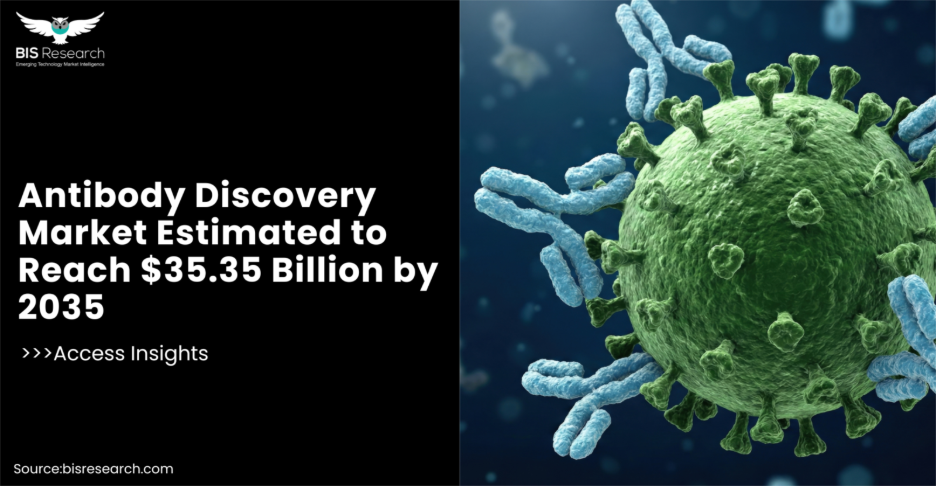
Antibody discovery is a foundational stage in biologics development, involving the identification, screening, and optimization of antibodies with high specificity and therapeutic potential. These antibodies form the basis of treatments for cancer, autoimmune disorders, infectious diseases, and a growing number of rare and chronic conditions. Modern antibody discovery integrates advanced biological platforms, computational tools, and high-throughput technologies to accelerate the journey from target identification to clinical candidate selection.
As precision medicine becomes central to drug development, antibody discovery is evolving from a largely experimental process into a data-driven, highly automated discipline. The shift toward fully human and humanized antibodies enabled by phage display, transgenic animal models, and single B-cell technologies has significantly improved safety, reduced immunogenicity, and enhanced clinical success rates. Combined with artificial intelligence, next-generation sequencing, and automation, antibody discovery platforms are dramatically shortening development timelines and improving cost efficiency across the biopharmaceutical pipeline.
According to BIS Research, the antibody discovery market was valued at $11.15 billion in 2025 and is projected to reach $35.35 billion by 2035, growing at a CAGR of 12.23% during 2025–2035.
Access Insights on Antibody Discovery Market
Key Drivers:
• Advancements in Antibody Engineering and Humanization Technologies
• Integration of AI and Machine Learning in Antibody Design and Optimization
• Rising Prevalence of Cancer, Autoimmune, and Infectious Diseases
• Adoption of High-Throughput Screening and Automation
• Increasing Outsourcing to Contract Research Organizations (CROs)
• Expansion of Next-Generation Antibody Modalities (Bispecifics, ADCs, Nanobodies)
[Download Complete TOC or Request Sample Report]
By Offering
• Product
• Services
By Technology
• Phage Display Technology
• Hybridoma Technology
• Single B-Cell Technologies
• Transgenic Animal-Based Methods
• Other Technologies
By Antibody Type
• Monoclonal Antibodies
• Polyclonal Antibodies
• Next-Generation Antibodies
By Nature
• Human Antibodies
• Humanized Antibodies
• Chimeric Antibodies
• Murine Antibodies
By Therapeutic Area
• Oncological Disorders
• Immunological Disorders
• Infectious Diseases
• Cardiovascular Disorders
• Neurological Disorders
• Others
By End User
• Pharmaceutical and Biotechnology Companies
• Contract Research Organizations
• Academic and Research Institutes
• Others
By Region
• North America
• Europe
• Asia-Pacific
• Rest-of-the-World
The global antibody discovery market is transitioning from an innovation-led phase to a scale-up and optimization phase, where speed, precision, and cost efficiency define competitive advantage. Artificial intelligence, automation, and high-throughput platforms are no longer optional tools; they are becoming core infrastructure for antibody discovery organizations.
While monoclonal antibodies continue to anchor market value, next-generation formats such as bispecific antibodies, antibody-drug conjugates, and single-domain antibodies are reshaping therapeutic pipelines, particularly in oncology and immunology. Over the next decade, the market is expected to move toward early maturity, characterized by standardized workflows, deeper CRO integration, and broader clinical adoption of AI-designed antibodies. Despite cost and modality competition challenges, antibody discovery will remain central to biologics innovation and precision medicine.
-BIS Research Analyst Team
BIS Research offers KOL-based insights, rigorous segmentation, and strategic advisory across software, hardware, and sensing tech domains.
Get deeper, tailored insights with a customized report designed around your market, technology focus, and strategic goals.