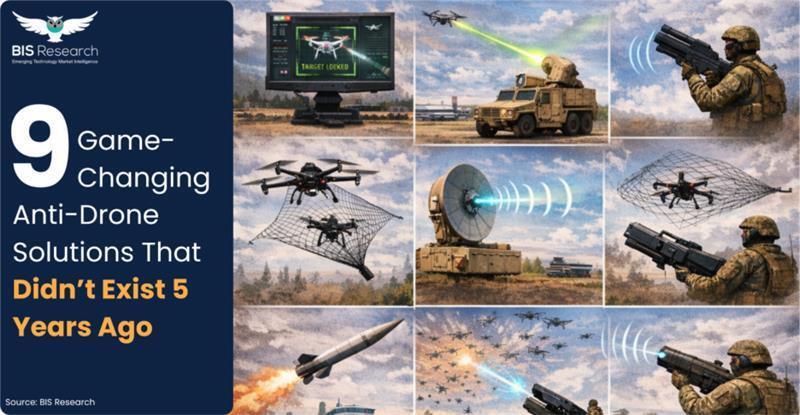
The drone revolution has been nothing short of extraordinary. In just a decade, unmanned aerial vehicles (UAVs) have evolved from hobbyist gadgets into indispensable tools across industries such as logistics, agriculture, surveillance, filmmaking, and defense. However, this rapid adoption has also introduced new security risks. Unauthorized drones have disrupted airports, smuggled contraband into prisons, conducted espionage, and even carried explosives in conflict zones.
As drone capabilities have advanced, so too has the urgency to counter them. Over the past five years, the counter-UAV (anti-drone) industry has undergone a dramatic transformation. What was once limited to basic radio jammers and radar detection systems has now expanded into a sophisticated ecosystem of AI-driven detection platforms, directed-energy weapons, autonomous interceptors, and integrated defense networks. Here are nine breakthrough anti-drone solutions that simply didn’t exist in their current form five years ago.
High-energy laser weapons have moved from experimental trials to operational deployment. Modern laser systems can disable or destroy drones by focusing intense energy beams on critical components such as propulsion systems or electronics.
Unlike traditional missile interceptors, lasers operate at the speed of light, provide near-instant engagement, and significantly reduce per-shot costs. They also minimize collateral damage because they don’t rely on explosive payloads. This makes them especially valuable for protecting airports, military bases, and urban infrastructure.
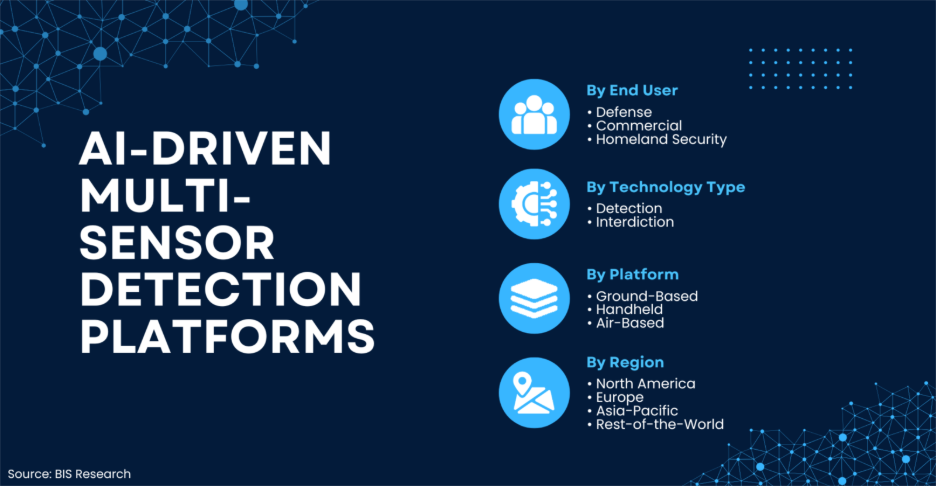
Today’s counter-drone systems no longer rely on a single detection method. Instead, they integrate radar, radio frequency (RF) scanners, electro-optical cameras, infrared sensors, and acoustic arrays into one AI-powered platform.
Machine learning algorithms analyze patterns in real time to distinguish drones from birds, aircraft, or environmental noise. This drastically reduces false alarms and improves response times. Five years ago, such intelligent multi-sensor fusion at scale was still emerging today it is becoming the industry standard.
Request a sample report on Counter UAV Market
One of the most transformative developments is the rise of drone-versus-drone defense. Autonomous interceptor UAVs are designed to track, pursue, and neutralize hostile drones mid-air.
Some systems physically collide with target drones, while others deploy nets or electronic disruption tools. These interceptors are agile, cost-effective, and ideal for countering swarm attacks a growing threat in modern warfare and critical infrastructure protection.
Traditional missiles are often too expensive and destructive for small drone threats. New non-kinetic interceptor systems are specifically engineered to counter UAVs without large explosive payloads.
These interceptors use precision guidance and controlled disruption methods to neutralize drones while minimizing debris and risk to civilians. They offer a balanced “hard-kill” option tailored to the scale of modern UAV threats.
High-Power Electromagnetic systems represent a major shift in soft-kill strategies. Instead of destroying drones physically, they emit electromagnetic pulses that disable onboard electronics.
This method can neutralize multiple drones simultaneously, making it particularly effective against swarms. Since the technology targets circuitry rather than airframes, it allows operators to disable threats without kinetic impact.
Anti-drone defense has become increasingly mobile. Lightweight, rifle-style jammers allow security personnel to disrupt a drone’s GPS signal or communication link directly from the ground.
When a drone loses signal, it may land automatically or return to its point of origin. Modern jammer rifles are more compact, energy-efficient, and precise than earlier versions, enabling rapid response in dynamic environments.
Drone swarms pose a unique challenge due to their volume and coordination. Micro-missile systems have emerged to address this threat.
These systems deploy small, cost-effective rockets capable of intercepting multiple drones in rapid succession. They are far less expensive than conventional air defense missiles and are specifically optimized for small UAV engagements.
New passive detection networks can monitor large areas without emitting signals that reveal their location. By analyzing radio frequencies and drone communication patterns, they can detect threats at extended ranges.
Passive systems are particularly valuable for border security, military installations, and sensitive government facilities where stealth detection is essential.
Perhaps the most significant advancement is system integration. Modern counter-drone ecosystems combine detection, identification, tracking, and neutralization into unified command platforms.
These systems use real-time data analytics and automation to coordinate multiple defense layers from AI sensors to lasers and interceptors. The result is a seamless, faster response cycle that dramatically improves airspace security.
The anti-drone landscape has evolved at remarkable speed. In just five years, counter-UAS technology has shifted from reactive jamming tools to sophisticated, layered defense architectures powered by AI, directed energy, and autonomous systems.
As drones become cheaper, smarter, and more accessible, anti-drone innovation will continue accelerating. The battle for low-altitude airspace is no longer futuristic it is happening now, and these nine technologies are leading the charge.